
.svg)



With over 40 years of experience in orthodontics, Dr. Sid Molayem has helped thousands of patients achieve healthier, straighter, and more confident smiles.
Do you want a perfect smile but are not sure whether to straighten your teeth or opt for a complete makeover? You are not alone!
With so many options available, you may feel overwhelmed about which treatment to choose to get the ideal smile.
Braces and Invisalign are designed to move your natural teeth into perfect alignment. Veneers quickly transform your smile and help cover stains and other imperfections.
Choosing the right treatment is not just about appearance; it is about function, cost, and long-term results.
In this blog, we will explore the real differences between orthodontics and veneers, understand their functions, and determine who they’re best for. We will further discuss the factors to consider and help you feel confident about your next step toward a smile you’ll love.
When it comes to transforming your smile, braces, Invisalign, and veneers each take a fundamentally different approach. Understanding these differences is crucial when weighing your options.
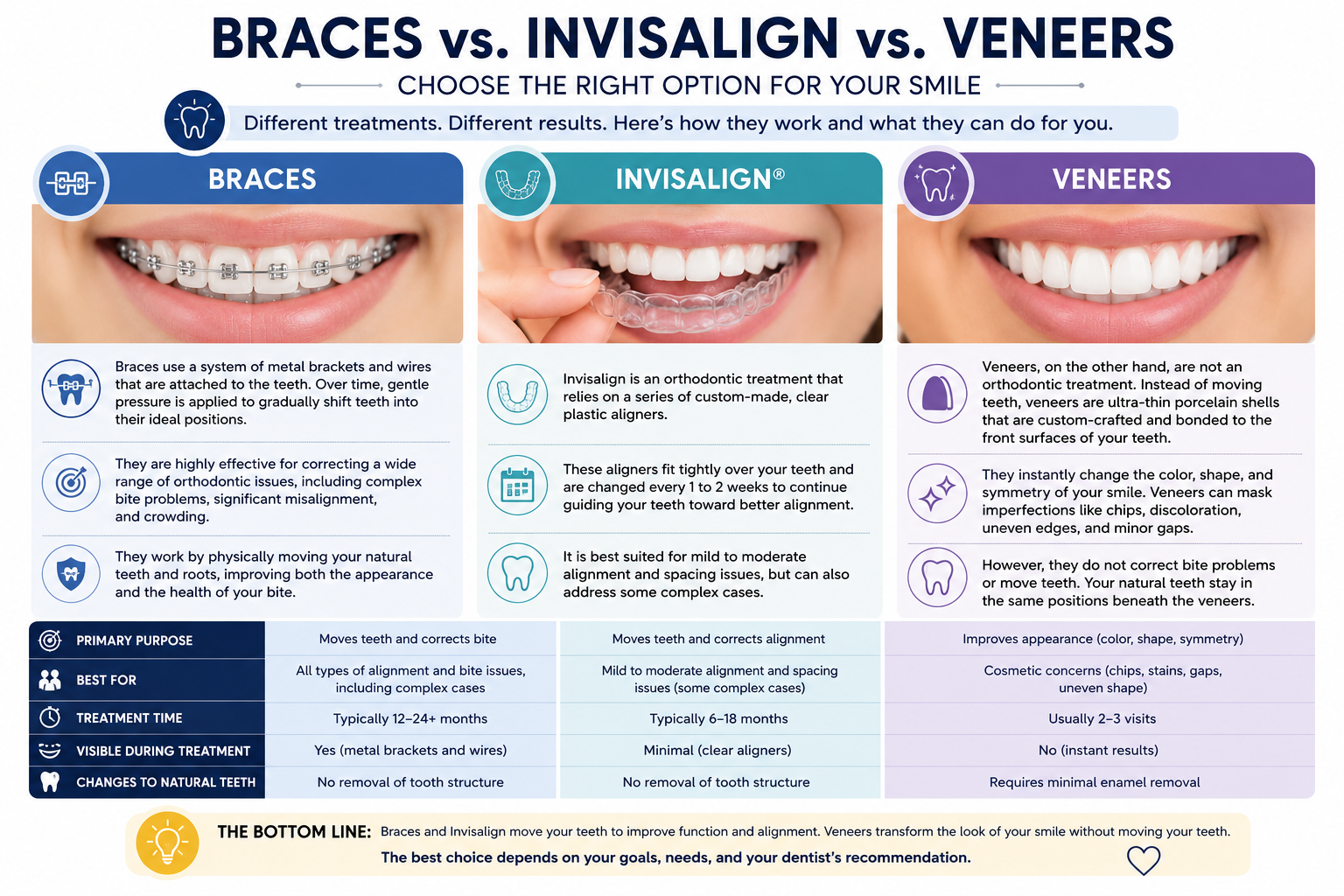
Braces are a reliable orthodontic option for straightening teeth and fixing bite issues. They apply gentle, continuous pressure using brackets and wires attached to your teeth.
Over time, this pressure gradually shifts your teeth to their ideal positions.
How it works:
This process straightens crooked teeth and addresses bite problems like overbites, underbites, and crossbites. Braces can also close gaps, correct crowding, and align rotated or misaligned teeth.
Invisalign clear aligners are a modern orthodontic treatment that uses a series of custom-made, plastic aligners to improve tooth alignment. Invisalign offers a discreet and more comfortable alternative to traditional braces.
How it works:
Both braces and Invisalign use your body’s natural bone remodeling process to achieve healthier tooth alignment.
The main difference is in how they apply gentle, controlled forces. The braces use fixed brackets and wires, while Invisalign relies on a series of removable, clear aligners.
Your orthodontist will recommend the best option based on your smile needs and goals.
If you want a quick, dramatic improvement for your smile, veneers are a popular choice in cosmetic dentistry.
They don't move your teeth or change your bite, but veneers can instantly enhance your smile by addressing various aesthetic concerns.
Let’s explore how veneers work, what they can achieve, and their limits.
Veneers are one of the most versatile solutions in cosmetic dentistry. Here are some of the most common cosmetic issues that veneers can effectively address:
By addressing these cosmetic concerns, veneers offer a fast and effective way to achieve a smile makeover tailored to your preferences.
While veneers are effective for cosmetic enhancement, they do have limitations. Veneers are not a fix for every dental issue and are not designed to:
When deciding between orthodontics and veneers to enhance your smile, you must understand that they have different purposes.
Orthodontics focuses on improving the function and health of your teeth by moving them into proper alignment. In contrast, veneers provide a quick cosmetic transformation by covering up surface imperfections.
Let’s look at the key differences in how each method affects your teeth, bite, and long-term oral health.
Orthodontics (braces or Invisalign) and veneers can both improve your smile, but in different ways.
Orthodontic treatments physically move your natural teeth into healthier positions, improving both your smile’s appearance and bite function.
On the other hand, Veneers do not shift or realign your teeth. Instead, they cover the front surfaces with thin porcelain shells, instantly hiding discoloration, chips, and minor gaps.
One of the biggest differences between orthodontics and veneers is their effect on your bite and long-term oral health. Orthodontics is designed for cosmetic improvement and functional benefits.
By aligning your teeth and correcting how your upper and lower jaws meet, orthodontics can help reduce key issues.
These may include -
Straight teeth are always easier to keep clean.
Whereas, Veneers are a purely cosmetic treatment. They can’t fix bite issues or address functional problems like crowding or misalignment.
They can enhance your smile's appearance, but they don't change how your teeth fit together or improve chewing function. If you have bite problems or want to prioritize your oral health, orthodontics is typically the better choice.
A significant benefit of orthodontics is that it preserves your natural tooth structure. Braces and Invisalign move your teeth without removing enamel or reshaping them. Once treatment is complete, your natural teeth remain intact, just in a better position.
Veneers usually require removing a thin layer of enamel from the front of your teeth to ensure a good fit and natural look. This process is often irreversible, as enamel won’t grow back.
Although the amount removed is minimal, it is a permanent change. Your teeth will always need some restoration in the future. If keeping your natural teeth is a top priority, orthodontics is the more conservative choice.
Orthodontic treatment aims to provide a permanent result, provided you wear your retainers as directed. After your teeth are moved into their ideal position, a retainer keeps them stable for the long term.
On the other hand, Veneers offer immediate cosmetic results, but they are not permanent restorations.
They need to be replaced every 10 to 15 years due to normal wear, potential chipping, or changes in your gums and underlying teeth.
Good habits, such as avoiding hard foods and maintaining regular dental visits, are crucial for maximizing their lifespan.
Deciding between orthodontic treatment and veneers usually depends on your specific dental needs and long-term goals.
In many cases, braces or Invisalign are preferred, especially when bite alignment, crowding, or preserving your natural teeth are important.
Here’s when orthodontics is generally the better choice for achieving a healthy, lasting, and beautiful smile.
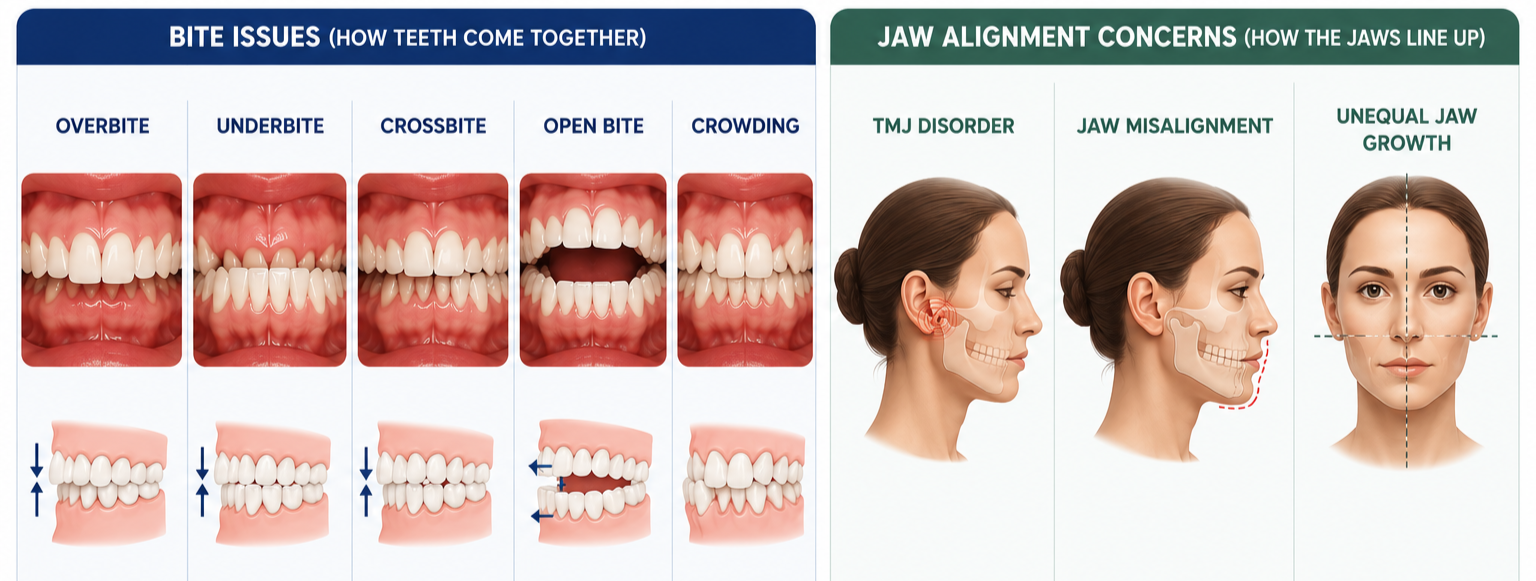
If you have an overbite, underbite, crossbite, or open bite, braces or Invisalign are usually the best option. These issues can affect chewing, comfort, and long-term oral health. Orthodontic treatment corrects tooth and jaw alignment, while veneers only improve appearance and cannot fix bite problems.
Braces and Invisalign are the most effective solutions for crowded, gapped, or significantly misaligned teeth. While veneers can mask minor imperfections, they cannot properly correct moderate to severe alignment issues. Orthodontic treatment moves teeth into their ideal positions, improving both appearance and function.
Orthodontic treatment improves more than just appearance. Straighter teeth are easier to clean, helping reduce the risk of cavities and gum disease, while a properly aligned bite can prevent uneven wear. Braces and Invisalign address the root causes of misalignment for healthier, long-term results.
Discover expert adult orthodontic treatment options to learn how braces and Invisalign can help improve your smile at any age.
Braces and Invisalign straighten teeth without removing or reshaping enamel, preserving your natural tooth structure. Veneers, however, typically require permanent enamel removal, making orthodontics the more conservative option.
If your teeth are generally healthy but you want to quickly improve the appearance of your smile, veneers might be just what you need. This treatment provides a fast, significant cosmetic improvement, especially for those looking to fix minor imperfections without braces or aligners.
Here’s when veneers could be the perfect choice for your smile goals.
Veneers can be a great cosmetic option if your teeth are only slightly crooked or uneven, but your overall bite is healthy and stable. In these situations, veneers can create the look of perfectly straight, uniform teeth without lengthy orthodontic treatment.
It is ideal for patients with minor crowding, small gaps, or slight rotation, but who do not have significant bite problems or jaw alignment concerns.
If your teeth fit together well and function properly, veneers can provide an attractive cosmetic transformation.
If your main concerns are the color, shape, or surface of your teeth, veneers are designed to address them.
Stubborn stains that don’t respond to professional whitening, chipped or cracked teeth, and naturally small or misshapen teeth. These can all be significantly improved with veneers.
The porcelain used for veneers resists staining and mimics the natural look of tooth enamel, resulting in a bright, youthful smile. Veneers can also restore the appearance of dull or worn teeth, giving you a refreshed look.
For patients wanting immediate results, veneers offer one of the quickest ways to achieve a complete smile makeover. They can be designed, made, and placed in just two or three dental visits over a few weeks.
Veneers are highly customizable and can be designed to enhance the overall symmetry, proportion, and balance of your smile.
Your dentist can work with you to choose the ideal shade, shape, and arrangement for your veneers. They ensure your smile looks balanced, natural, and tailored to your preferences.
It is crucial to understand the trade-offs and long-term factors before making your decision. While they are often used in cosmetic dentistry, veneers are not a good fit for everyone.
Here are the most important factors to weigh:
1. Irreversible Enamel Removal
Most veneer procedures involve removing a thin layer of enamel from the front of each tooth. This is done to ensure the veneers fit smoothly and look natural, but it is a permanent change.
Once you opt for veneers, your teeth will always need some form of covering or restoration in the future.
2. Potential for Tooth Sensitivity
As the protective enamel layer is reduced, some individuals may experience increased sensitivity after getting veneers. This sensitivity might lessen over time, but in some cases, it can persist.
3. Maintenance and Replacement
Porcelain veneers are durable but not permanent. They generally last 10 to 15 years before needing replacement.
This may happen due to chipping, edge staining, wear, or changes in the underlying teeth and gums. You should plan for future dental work and related costs throughout your life.
4. Not a Solution for Underlying Alignment or Bite Issues
Veneers only address the visible surfaces of your teeth; they don’t fix bite problems, significant misalignment, or jaw issues.
Using veneers to cover moderate to severe crookedness can result in bulky or unnatural-looking teeth. It may also affect your overall oral hygiene.
5. Risk of Damage
While porcelain is strong, veneers can chip or break if you bite down on hard foods, grind your teeth, or experience trauma to your mouth.
You'll need to develop good habits and possibly wear a night guard if you clench or grind your teeth at night.
6. Commitment to Regular Dental Care
Veneers require ongoing good oral hygiene and regular professional checkups. Gum recession or dental issues can impact how veneers look and how long they last.
Yes, you can combine orthodontic treatment with veneers to achieve both good dental health and a beautiful smile. For many patients, using both methods in order gives the best results.
The most common approach is to start with orthodontic treatment, like braces or Invisalign. This helps straighten your teeth and correct any bite or alignment issues.
This step establishes a healthy, stable base by moving your natural teeth into their proper positions. It ensures your bite fits together well.
By addressing crowding, spacing, or bite problems first, you reduce the risk of uneven wear. It will help you make cosmetic treatments easier and more successful.
After your teeth are properly aligned, veneers can add the finishing touch to your smile makeover.
Veneers can improve the shape, size, and color of your teeth. It fixes cosmetic issues like discoloration, chips, worn edges, or small flaws that braces or Invisalign alone can't solve.
This combined method allows for a more conservative veneer procedure. It requires less enamel removal since the teeth are already in position.
Why Combine Both?
Not everyone needs both treatments. If you have bite issues, significant misalignment, or want to make lasting changes to the health and appearance of your smile, a combined approach might be best.
Your dentist or orthodontist will assess your individual needs and help you develop a step-by-step treatment plan.
Combining Invisalign or braces with veneers can give you both a healthy, well-aligned bite and a beautifully improved smile.
If you're thinking about both options, talk to your dental team about the timing and sequence to achieve long-lasting, natural-looking results.
Choosing between orthodontics (braces or Invisalign) and veneers is a vital decision based on your dental needs, cosmetic goals, and long-term priorities.
Understanding your options and the necessary factors will help you make a confident, informed choice.
Assess Your Main Concerns
Start by identifying what you want to improve about your smile.
Choosing between orthodontics and veneers comes down to your specific dental concerns and long-term priorities.
Here are the key factors to consider:
Deciding between orthodontics and veneers is a personal choice based on your dental health, cosmetic goals, and what matters most to you in the long term.
Both options can help you achieve a more confident smile, but they work in very different ways and offer different benefits.
By understanding the strengths and limitations of each, you’re better equipped to make the right choice for your needs.
Still have questions about veneers vs braces or Invisalign?
Our team is here to help you explore your options and guide you toward the healthiest, most beautiful smile possible. Schedule a consultation or call us today. We are here to answer all your questions and support you every step of the way.
Veneers can be a good choice if your teeth are only slightly crooked and your bite is healthy. They can create the appearance of straighter teeth by covering minor misalignment. However, if you have significant crowding or bite issues, orthodontic treatment such as braces or Invisalign is usually the healthier and more effective option.
When overseen by an experienced orthodontist and paired with good oral hygiene, braces and aligners are very safe for your teeth. They're designed to gently and predictably move your teeth. Wearing retainers after treatment also helps keep your results stable and prevents teeth from shifting back.
Some cases qualify for "minimal-prep" or "no-prep" veneers, which require little to no enamel removal. However, not everyone is a candidate; your tooth position, bite, and enamel thickness all play a role. Your dentist will let you know if minimal-prep veneers are a safe and natural-looking option for you.
Veneers are durable but not permanent. Many last 10–15 years or more with proper care, but their lifespan depends on your oral habits, bite forces, and the material used. Over time, you may need to replace veneers to keep your smile looking its best.
You might consider starting with orthodontic treatment, such as clear aligners, to gently align your teeth first. This can minimize or even eliminate the need for extensive enamel removal if you decide to get veneers later, resulting in a more conservative and long-lasting outcome.
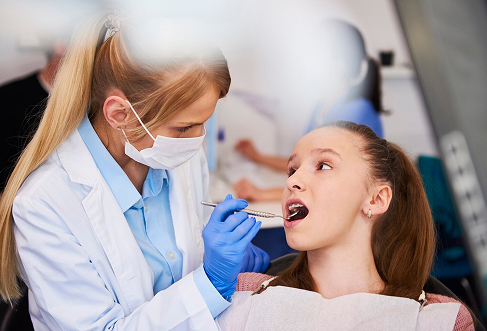
Choosing an orthodontist is one of the most important healthcare decisions you'll make. You're not just choosing someone to straighten teeth—you're trusting them with your smile, your bite, and years of your life.
.jpg)
As a parent, you want to do everything right for your child's health. But when it comes to orthodontics, the timing can be confusing. Here's what you need to know.
.jpg)
It's one of the first questions everyone asks: "How long will I be in braces?" The answer depends on your case, not the calendar. But here's what you need to know to set realistic expectations.
Book your free consultation and get your personalized plan, smile simulation, and estimate today
Beverly Hills Braces is accepting and respectful of every patient’s dental needs and situation.
.svg)
.svg)
.svg)
.svg)
Copyright © 2026 Beverly Hills Braces.
All Right Reserved.
Quick Links
Copyright © 2026 Beverly Hills Braces.
All Right Reserved.

.svg)