
.svg)



With over 40 years of experience in orthodontics, Dr. Sid Molayem has helped thousands of patients achieve healthier, straighter, and more confident smiles.
Are you planning to straighten your teeth but are confused whether to see a dentist or an orthodontist?
With so many treatment options out there, you may feel overwhelmed about where to start and whom to trust with your smile.
Both these professionals play essential roles in oral care, but they are not the same.
Making the right choice between an orthodontist and a general dentist impacts your results, treatment duration, and oral health.
In this blog, we will break down the differences between an orthodontist and a dentist when it comes to straightening your teeth.
We will further discuss why choosing an orthodontist is better, why orthodontist certification matters, and what to look for when choosing one.
Start reading!
Before deciding who will handle your smile makeover, it's crucial to understand the differences between orthodontists and dentists. Although both are skilled in oral health, their responsibilities and knowledge vary significantly.
If you're deciding between an orthodontist and a general dentist for teeth straightening, understanding the differences is crucial.
A general dentist serves as your primary oral healthcare provider. Their primary focus is on preserving your overall dental well-being.
Dental professionals provide regular services, including cleanings, fillings, crowns, preventive treatments, and care for common oral issues.
Some general dentists provide teeth alignment options, including clear aligners (such as Invisalign). It raises a question among patients about whether a dentist can effectively align teeth. The answer is yes, but usually only for slight alignment concerns.
Dentists undergo extensive dental training. But their training in tooth shifting and intricate bite adjustments is less comprehensive than that of orthodontists. They can manage simple cases, but intricate problems require specialized knowledge.
An orthodontist is a specialist in straightening teeth (medical term: orthodontics) who aims to fix misaligned teeth and jaws. They complete an additional 2–3 years of focused orthodontic residency dedicated to tooth movement and jaw alignment.
The orthodontists do the following -
Orthodontists excel in both clear aligners and braces, treating a range of orthodontic issues.
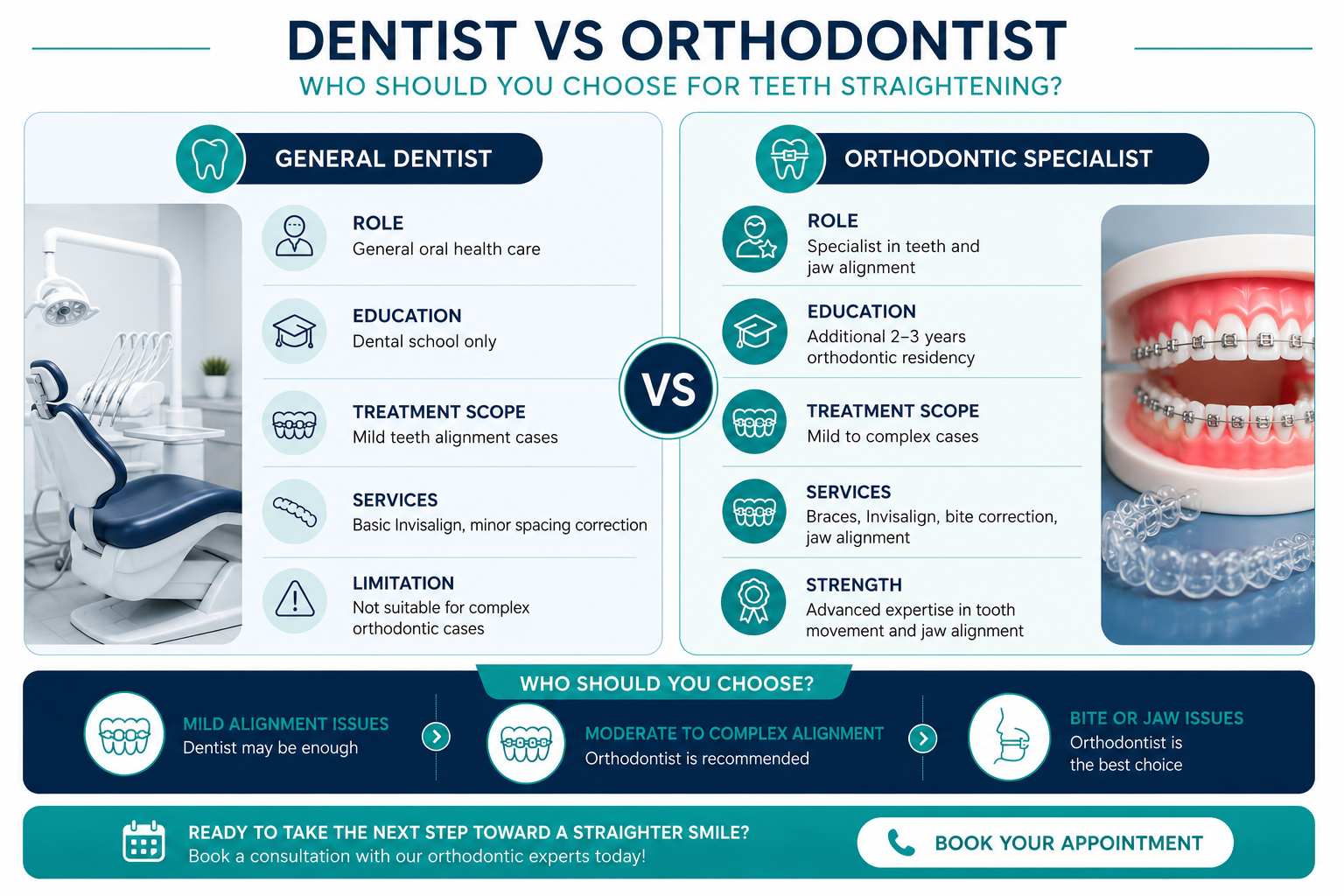
In achieving a healthy, lasting smile, the professional you choose for your orthodontic treatment is crucial.
While both dentists and orthodontists help straighten your teeth, the approach, expertise, and focus on results can vary significantly.
A well-planned orthodontic treatment enhances your smile and helps prevent long-term dental problems such as uneven wear and jaw discomfort.
Let’s examine why collaborating with an orthodontist frequently proves to be the better option -
Many general dentists focus on cosmetic alignment, enhancing the positioning of your front teeth for improved aesthetics. It can improve your smile, and may not resolve functional problems such as bite alignment or jaw irregularities.
On the other hand, orthodontists adjust your complete bite, including back teeth, jaw alignment, and overall functionality.
This method ensures the health and stability of your bite, beyond just appearance.
Correctly addressing bite issues helps avoid uneven tooth wear, jaw discomfort, and various dental health concerns.
A major concern after orthodontic treatment is the risk of relapse, as teeth may return to their original positions.
Orthodontists plan for long-term stability by:
This reduces the risk of problems later and safeguards your investment in a straight, healthy smile.
These cases require advanced expertise and precise treatment planning. It is necessary to deal with conditions like -
Orthodontists are skilled at identifying and addressing the Malocclusion issues. They use various appliances and methods customized to your specific requirements.
For the majority of patients seeking enduring, comprehensive results, an orthodontist is ideally suited to deliver exceptional outcomes.
Board certification is a way to distinguish those who have excelled in their profession. This additional qualification shows a higher degree of training, commitment, and demonstrated skill.
Board certification is a voluntary, esteemed qualification granted by the American Board of Orthodontics (ABO).
An orthodontist can attain board certification with the following qualifications:
Choosing a board-certified orthodontist ensures selecting a highly qualified, skilled expert committed to quality. This additional level of training and evaluation provides greater confidence.
Technology is changing the world of orthodontics, making treatments faster, more comfortable, and precise than ever before.
From digital scans to 3D imaging and advanced treatment planning, the orthodontic tools offer a range of benefits.
Here, we will explore how cutting-edge technology is reshaping your experience when straightening your teeth.
Nowadays, orthodontic treatments are more advanced and comfortable than ever before. Common options include:
It leads to comparisons like dentist vs orthodontist for Invisalign, as well as Invisalign vs braces when choosing the best treatment option for teeth straightening.
While both may offer aligners, orthodontists provide more in-depth diagnosis, personalized treatment, and better management of complex movements.
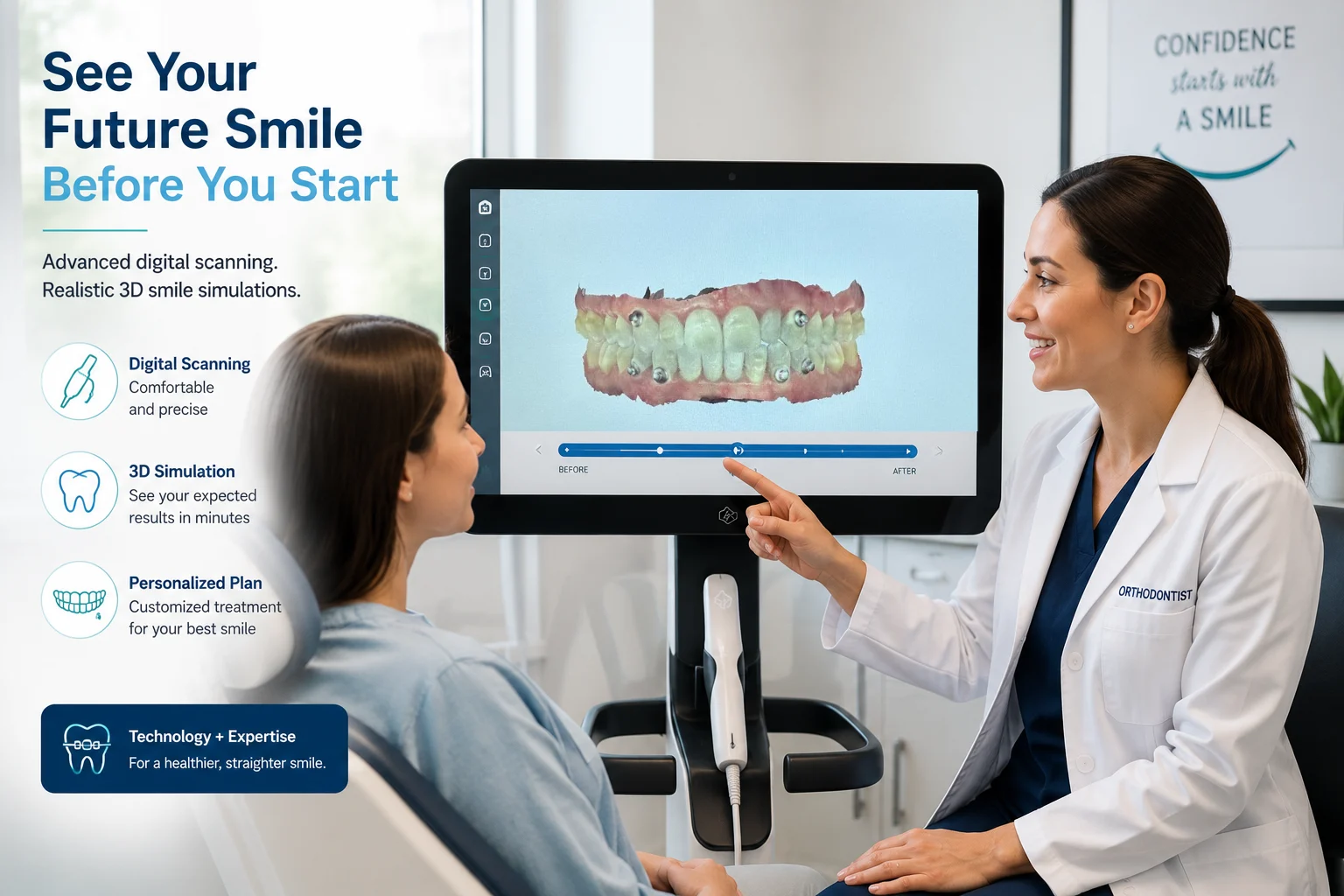
Modern orthodontic practices implement digital scanners instead of traditional, messy impressions.
3D digital models of your teeth allow for:
It makes your orthodontic consultation more informative and engaging.
Advanced imaging tools help orthodontists evaluate:
Accurate diagnostics facilitate better treatment strategies and reduce the chances of unexpected issues throughout your orthodontic experience.
Technology not only improves accuracy, but also:
Patients gain from a more seamless, consistent experience and improved outcomes.
Asking the right questions helps you understand your provider's expertise and their approach to care. You must know what you can expect during your orthodontic treatment.
Here are key topics to discuss during your consultation to help you make a well-informed choice.
Deciding whether to see an orthodontist or a dentist for braces and other treatments can be confusing. Yet, not all possess the same training or proficiency in specialized therapies.
Identifying a few key warning signs early can help you avoid ineffective treatments, excessive expenses, or disappointing outcomes. It ensures you receive care that genuinely aligns with your needs.
When selecting a provider, look for warning signs that may indicate subpar care.
Unusually low pricing may mean:
This cosmetic method may lead to relapse, bite issues, and the need for expensive corrections later.
Other red flags include:
A qualified provider will focus on your whole bite, not just the visible alignment.
With numerous orthodontic providers in Beverly Hills, selecting the ideal one for your requirements can be overwhelming.
It is crucial to emphasize the aspects that impact your treatment experience and outcomes. Make a well-informed choice to get exceptional care and a stunning, healthy smile.
Consider these factors when selecting an orthodontist in Beverly Hills -
Check that your provider has finished a recognized and authentic orthodontic residency program. This ensures they can confidently handle both simple and complex orthodontic cases.
Orthodontists with board certification show a dedication to high standards and continuous learning. Look for this credential as an indicator of exceptional expertise.
Select a clinic that provides digital scanning, 3D imaging, and advanced treatment choices. These investments result in more precise, comfortable, and effective care.
A reliable orthodontist offers a transparent, comprehensive cost outline and is clear about all expenses. You should feel encouraged to ask questions, and they ought to detail your treatment plan comprehensively.
Choosing the appropriate orthodontist is a significant step toward attaining the smile you've always desired. Having a clear checklist in mind is beneficial when there are numerous options to consider.
Here are several useful tips to help you in the selection process and ensure you have confidence in your choice right from the beginning.
Start by finding orthodontists near you and checking their online ratings. Seek out providers who receive consistently favorable reviews from patients and have a solid standing in the local community.
You must focus on the workplace atmosphere, employee friendliness, and the quality of outcomes. Recommendations from friends or family through word of mouth can also be extremely beneficial.
Feel free to consult orthodontists before finalizing your decision. Consultations allow you to evaluate the provider's methodology and communication, and to determine whether you feel at ease in their office.
Evaluate their suggested treatment plans, cost arrangements, and the comprehensiveness of their responses to your inquiries. It will help determine which provider best matches your requirements and expectations.
Be ready with a set of questions to ensure you fully understand your treatment options.
Ask about the orthodontist's background with similar cases, the technology they utilize, estimated treatment durations, and what your plan covers.
Remember to inquire about retention strategies; maintaining your new smile is as crucial as attaining it.
Though quick cosmetic solutions can be tempting, the top orthodontists prioritize thorough care and long-term stability.
They need to evaluate your bite, jaw position, and overall dental health, not just the placement of your front teeth.
Providers adopting a holistic approach are more inclined to produce outcomes that are both attractive and long-lasting.
Whether you need an orthodontist for children, teens, or adults, timely assessment and expert treatment are essential for achieving optimal outcomes.
Children will benefit from prompt intervention, whereas adults may require a provider skilled in subtle alternatives such as clear aligners.
Ensure your orthodontist has experience treating patients your age.
Choosing between an orthodontist and a general dentist impacts your long-term smile, confidence, and oral health. Don't rush into quick cosmetic fixes. Take the time to assess their expertise and ask the right questions. Your choice today affects your results for years to come, so invest in comprehensive care with confidence.
At Beverly Hills Braces, expert orthodontist Dr. Molayem comes with decades of experience, advanced technology, and a commitment to delivering lasting results.
We believe in personalized care and transparent communication, so you feel confident every step of the way.
We offer complimentary consultations where you can ask questions, explore your treatment options, and achieve your smile goals.
You should see an orthodontist if you have concerns about crooked teeth, bite alignment, jaw pain, or crowded or spaced teeth.
Orthodontists have specialized training to diagnose and treat complex tooth and jaw alignment issues that go beyond general dentistry.
If your case involves more than minor cosmetic adjustments, an orthodontist is best suited to provide comprehensive, long-term solutions.
No, Invisalign is offered by both dentists and orthodontists. However, orthodontists have advanced training in tooth movement and bite correction, making them the preferred choice for more complex cases.
For straightforward alignment, a dentist may offer Invisalign; however, for the most predictable and stable results, especially for moderate to severe orthodontic issues, an orthodontist’s expertise is recommended.
Early orthodontic care is often called interceptive orthodontics. It allows orthodontists to identify and address potential problems while a child’s jaw and teeth are still developing.
Early evaluation, usually by age 7, can help guide jaw growth, create space for incoming teeth, correct harmful oral habits, and prevent more serious issues later on.
This proactive approach can reduce the need for more extensive treatment as your child grows.
Most dentists are not orthodontists. While all orthodontists are dentists, only a small percentage complete an additional 2-3 years of specialized orthodontic training after dental school.
Unless your dentist specifically holds this advanced qualification, they should not be considered an orthodontist.
Yes, orthodontics can address many jaw problems, such as misalignment, improper bite, and certain jaw growth discrepancies.
Orthodontists use braces, aligners, and sometimes additional appliances to guide the jaw into a healthier position.

Choosing an orthodontist is one of the most important healthcare decisions you'll make. You're not just choosing someone to straighten teeth—you're trusting them with your smile, your bite, and years of your life.
.jpg)
As a parent, you want to do everything right for your child's health. But when it comes to orthodontics, the timing can be confusing. Here's what you need to know.
.jpg)
It's one of the first questions everyone asks: "How long will I be in braces?" The answer depends on your case, not the calendar. But here's what you need to know to set realistic expectations.

Book your free consultation and get your personalized plan, smile simulation, and estimate today
Beverly Hills Braces is accepting and respectful of every patient’s dental needs and situation.
.svg)
.svg)
.svg)
.svg)
Copyright © 2026 Beverly Hills Braces.
All Right Reserved.
Quick Links
Copyright © 2026 Beverly Hills Braces.
All Right Reserved.

.svg)